How Much Protein Do I Need Per Day?
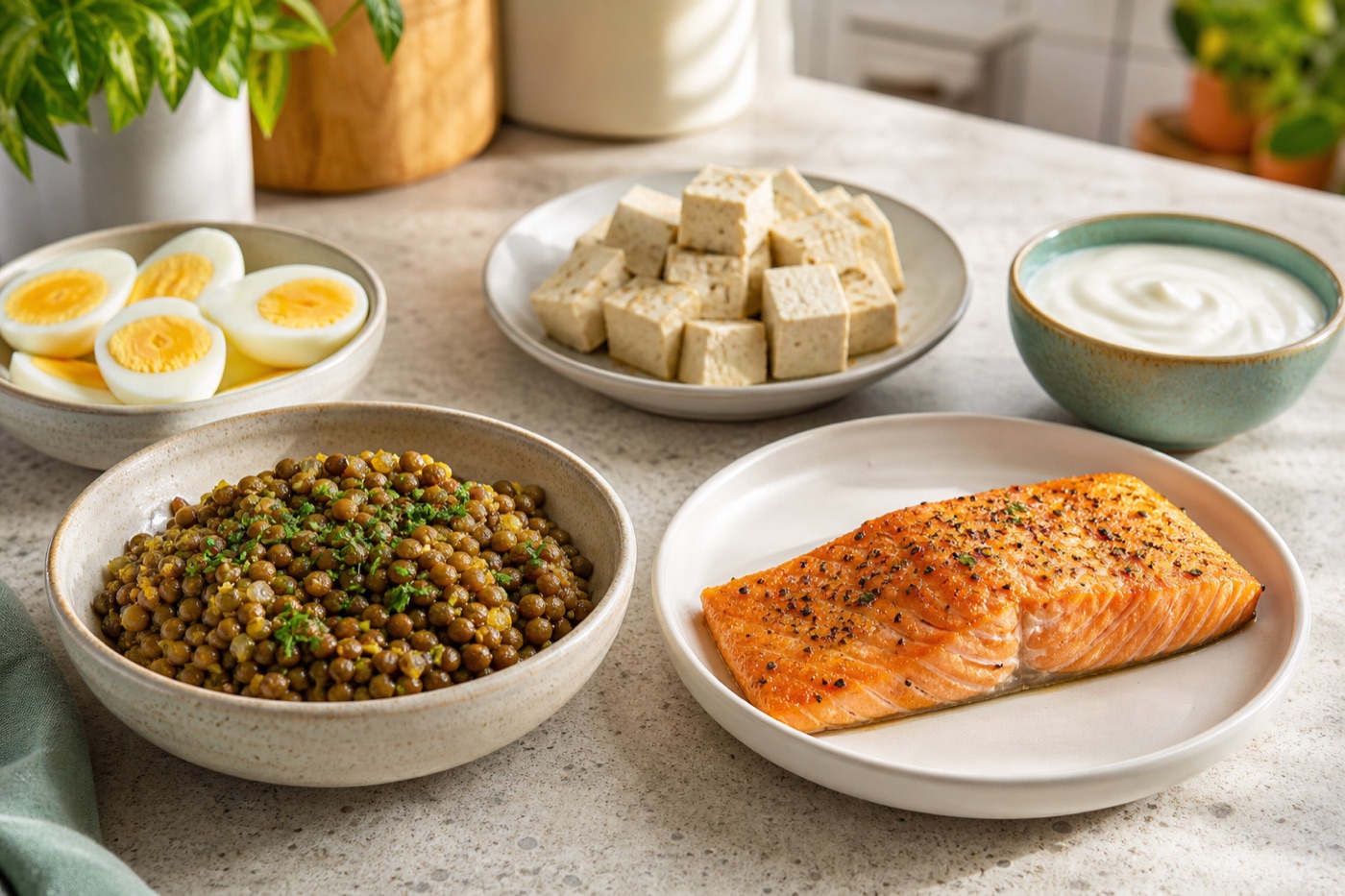
Most healthy adults need at least 0.8 grams of protein per kilogram of body weight per day, the Recommended Dietary Allowance.
Read more →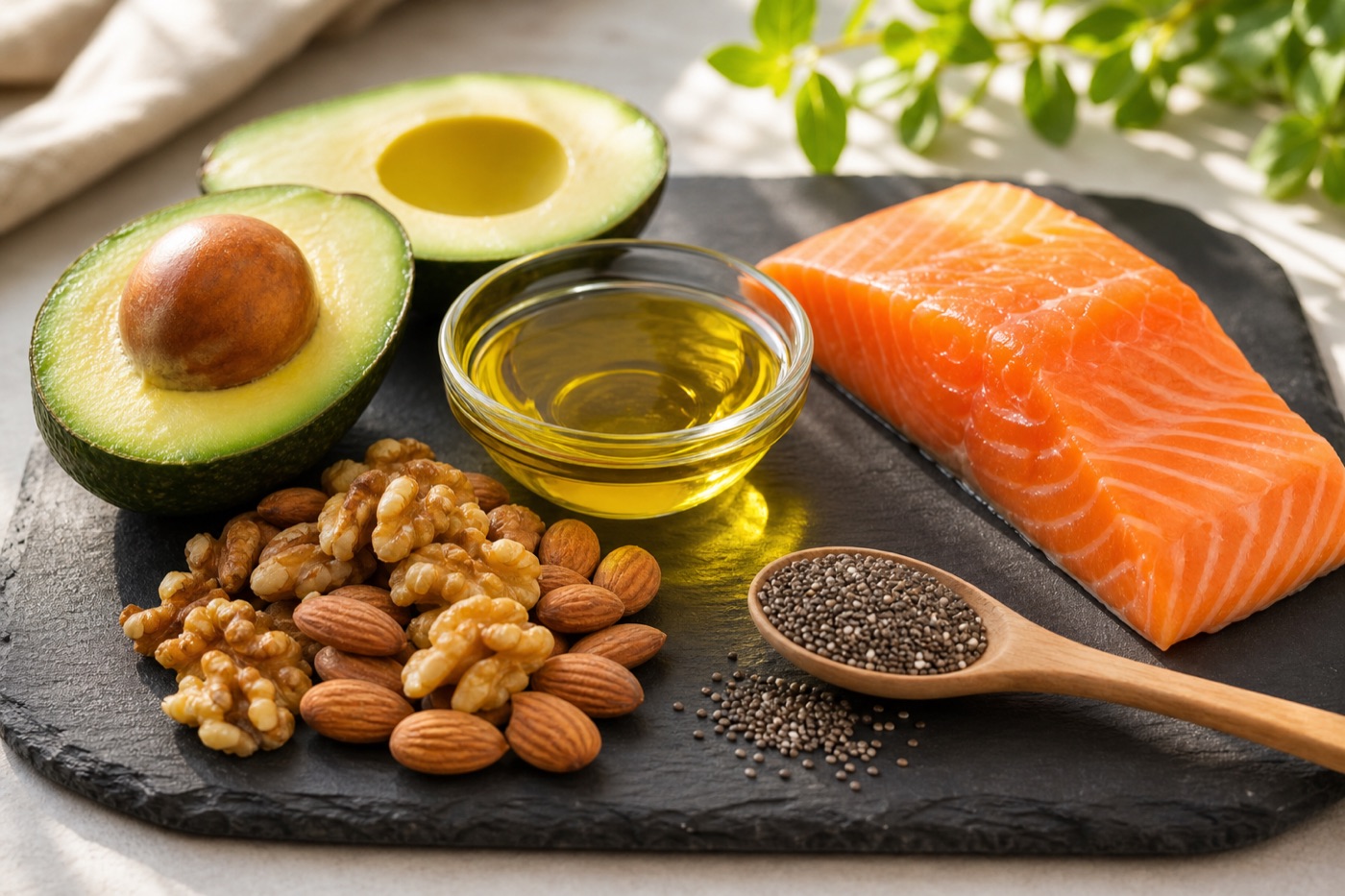
Healthy fats are mostly unsaturated fats, the kind found in olive and canola oil, avocados, nuts, seeds and fatty fish like salmon and sardines. Your body needs fat to absorb certain vitamins, build cells and make hormones, and choosing these unsaturated sources in place of saturated fat is linked with better heart health. The main fats to limit are saturated fat and artificial trans fat.
Fat isn’t the enemy. It:
The National Academies suggest adults get about 20% to 35% of their calories from fat. On a 2,000-calorie day, that’s roughly 44 to 78 grams.
| Type | Where it’s found | What to know |
|---|---|---|
| Monounsaturated | Olive oil, canola oil, avocados, almonds, cashews, peanuts | Linked with heart health when it replaces saturated fat |
| Polyunsaturated (omega-6) | Soybean, corn and sunflower oils, walnuts, sunflower seeds | Essential; helps lower LDL cholesterol when it replaces saturated fat |
| Polyunsaturated (omega-3) | Salmon, sardines, mackerel, trout, walnuts, flaxseed, chia, canola oil | Essential; supports heart, brain and eye health |
| Saturated | Butter, cheese, fatty and processed meats, coconut and palm oil, many baked goods | Can raise LDL cholesterol; best kept moderate |
| Trans (artificial) | Partially hydrogenated oils, now rare in US foods | Raises LDL and lowers HDL cholesterol; avoid |
Most foods contain a mix. Olive oil is mostly monounsaturated with some saturated fat, while butter is mostly saturated with some unsaturated.
There are three main omega-3s. ALA comes from plant foods like flaxseed, chia seeds, walnuts and canola oil. EPA and DHA come mainly from fatty fish and seafood, and from algae. Your body can convert a little ALA into EPA and DHA, but only a small amount, which is why seafood is such a valuable source.
The Dietary Guidelines suggest about 8 ounces of seafood a week for adults eating around 2,000 calories, and the American Heart Association recommends fish, especially fatty fish, about twice a week. If you’re pregnant, breastfeeding or feeding young children, the FDA publishes advice on choosing fish lower in mercury, and your doctor can help you apply it. If you don’t eat fish, ask your doctor or a dietitian whether an algae-based omega-3 makes sense for you.
The Dietary Guidelines for Americans, 2020-2025, recommend keeping saturated fat below 10% of daily calories, about 22 grams on a 2,000-calorie diet. The American Heart Association suggests aiming lower for people who need to bring down their LDL cholesterol.
What replaces saturated fat matters. Swapping it for unsaturated fats from plant oils, nuts and fish is linked with lower heart disease risk. Swapping it for refined starches and sugars, as many old-style low-fat products did, doesn’t offer the same benefit.
Artificial trans fats come from partially hydrogenated oils, once common in stick margarine, shortening, fried foods and packaged baked goods. Because they raise LDL and lower HDL cholesterol, the FDA took action to remove partially hydrogenated oils from the US food supply. They’re now rare in US products, though it’s still worth scanning ingredient lists on imported or older items. Small amounts of trans fat also occur naturally in dairy and meat.
Unsaturated fats are central to the Mediterranean diet, and keeping saturated fat in check is part of the heart-friendly DASH diet. To see how fat fits with protein and carbohydrates, read our guide to macros.
Healthy fats are mostly unsaturated fats from plant oils, nuts, seeds, avocados and fish. Aim for about 20% to 35% of your calories from fat, keep saturated fat under 10%, and avoid artificial trans fats. Small swaps, like cooking with olive or canola oil and eating fish twice a week, add up to a heart-friendly pattern.
Olive oil is an excellent choice, rich in monounsaturated fat, and extra-virgin olive oil also contains beneficial plant compounds. Canola, avocado, peanut, soybean and other plant oils are healthy options too, so you can choose based on flavor, cooking method and budget.
Coconut oil is very high in saturated fat, which can raise LDL cholesterol. The American Heart Association has advised against using it in place of unsaturated oils. It's fine as an occasional flavor, but it isn't a heart-health food.
The National Academies suggest about 20% to 35% of daily calories from fat for adults. On a 2,000-calorie diet that's roughly 44 to 78 grams. The type of fat matters more than hitting an exact number.
Most people can get omega-3s from food by eating fish about twice a week or including walnuts, flaxseed and chia seeds. Some people may be advised to take a supplement, but talk with your doctor first, especially if you take blood thinners or other medications.
This guide is general information, not medical advice. For a health condition, pregnancy or a history of disordered eating, please talk with a doctor or registered dietitian.
Most healthy adults need at least 0.8 grams of protein per kilogram of body weight per day, the Recommended Dietary Allowance.
Read more →The Dietary Guidelines for Americans advise adults to keep sodium under 2,300 milligrams a day, about the amount in one teaspoon of table salt.
Read more →The National Academies set adequate total water intakes of about 3.7 liters a day for men and 2.7 liters for women, counting water from all drinks and foods.
Read more →