Net Carbs vs Total Carbs: What's the Difference?
Total carbs are all the carbohydrates in a food, including starch, sugars and fiber, and on US labels sugar alcohols too.
Read more →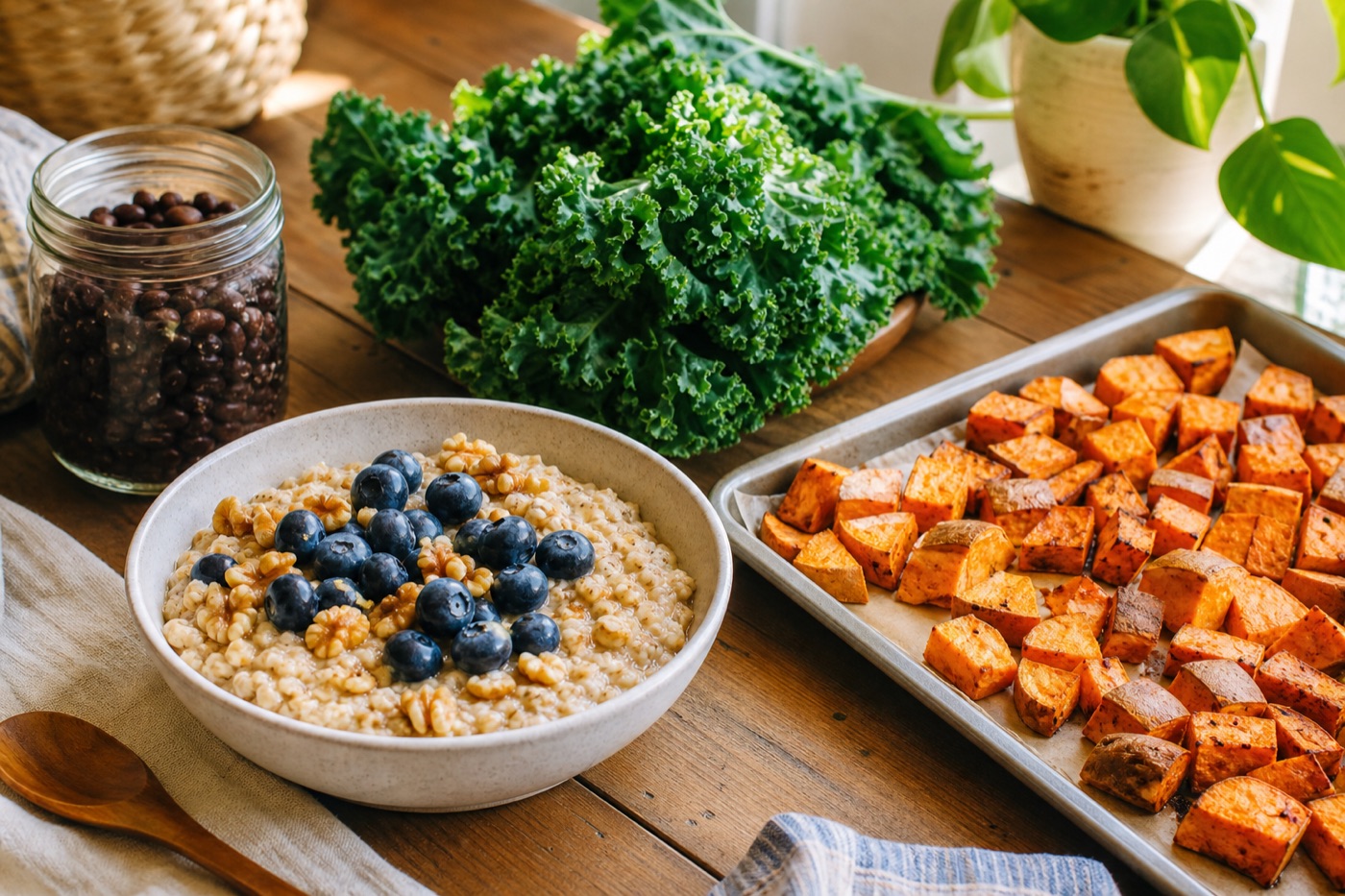
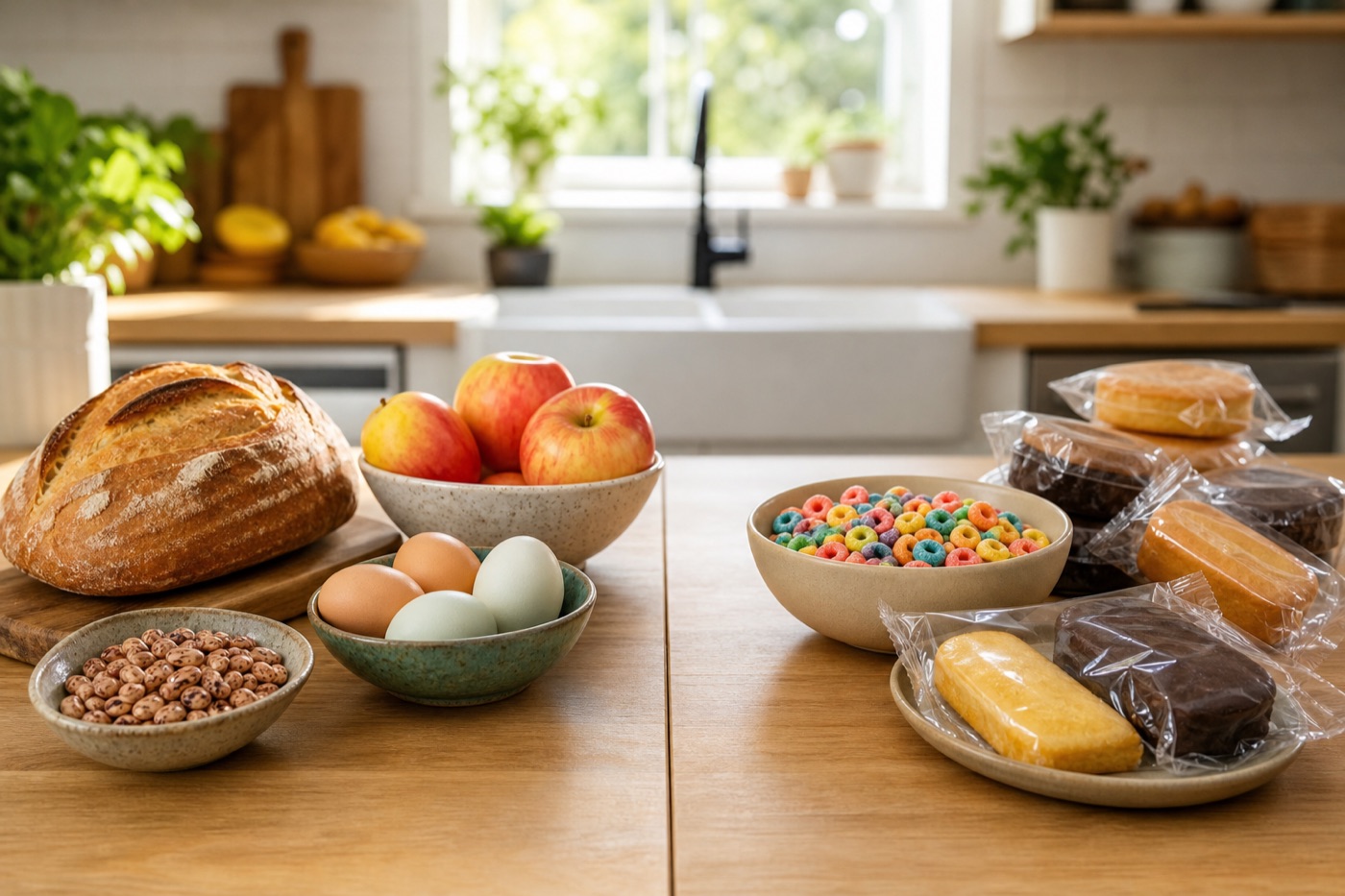
Clean eating is an informal name for a way of eating built mostly around whole or lightly processed foods: vegetables, fruit, whole grains, beans, nuts, seeds, eggs, dairy, fish and other simple proteins. There’s no official definition, so it works best as a loose compass rather than a rulebook. At its most helpful, it just means cooking with more ingredients you recognize and leaning a little less on heavily processed snacks, sweets and drinks.
“Clean eating” grew out of fitness culture and food blogs, not out of nutrition science or government guidelines. That’s why you’ll see the phrase stretched to cover everything from “eat more vegetables” to very restrictive plans that cut out entire food groups. The version worth keeping lines up neatly with mainstream advice. The Dietary Guidelines for Americans, for example, encourage nutrient-dense foods and suggest limiting added sugars, saturated fat and sodium, which is most of what sensible clean eating is trying to do anyway.
Most interpretations share a common core:
What it tends to limit are sugary drinks, sweets, refined snack foods and processed meats. If you’d like to understand that category better, our guide to ultra-processed foods explains how foods are grouped by how much they’ve been processed.
A lot of myths have attached themselves to the word “clean.” You can safely skip them:
When clean eating simply means more whole foods, you’ll usually get more fiber, potassium, vitamins and beneficial plant compounds, and less added sugar and sodium. Those shifts match the eating patterns that health organizations associate with better heart health. Many people also notice that meals built on whole foods keep them satisfied longer, since fiber and protein take more time to digest. For a practical way to judge how much nutrition a food delivers for its calories, see our explainer on nutrient density.
The biggest downside of clean eating is the language itself. Sorting foods into “clean” and “dirty” can breed guilt, anxiety or an all-or-nothing mindset. For some people it grows into an unhealthy fixation on eating perfectly, sometimes called orthorexia. If food rules are crowding your thoughts, keeping you away from shared meals or leaving you ashamed, please reach out to a doctor, a registered dietitian or a mental health professional. Gentler approaches such as mindful eating can help you reconnect with hunger, fullness and enjoyment.
Here’s one flexible day. Swap in the foods and flavors that fit your culture and budget.
| Meal | Example | Why it works |
|---|---|---|
| Breakfast | Oats cooked with milk or fortified soy drink, topped with frozen berries and walnuts | Whole grain, fiber, healthy fat |
| Lunch | Black bean and rice bowl with salsa, avocado and shredded cabbage | Plant protein, vegetables, satisfying fat |
| Snack | Plain yogurt with a sliced banana | Protein, calcium, natural sweetness |
| Dinner | Baked fish or tofu, roasted sweet potatoes and garlicky sautéed greens | Protein, complex carbs, leafy vegetables |
Nothing here is exotic or expensive. A balanced plate gives you a simple template to repeat at any meal.
You don’t need a perfect pantry to start. A few easy moves go a long way:
Clean eating has no official meaning, but its best version is refreshingly simple: eat mostly whole and minimally processed foods, and enjoy everything else without guilt. Focus on adding vegetables, beans, whole grains and simple proteins rather than banning foods, and shape the idea around your body, your budget and your table.
It can be, when it simply means eating more vegetables, fruit, whole grains, beans and simple proteins. That lines up with mainstream nutrition advice. It becomes less healthy when it turns into rigid rules, cuts out whole food groups without a medical reason, or causes guilt around food.
Yes. Frozen vegetables and fruit, canned beans, canned tomatoes and canned fish are affordable, nutritious staples. Choose versions without added sugar when you can, and rinse canned beans to remove some of the salt.
No. Organic is a farming method, not a nutrition requirement. Eating more produce of any kind matters far more for your health than whether it carries an organic label, so buy what fits your budget.
Some people find that meals built on whole foods keep them fuller, which can make it easier to eat a little less. But clean eating isn't a weight-loss plan by itself, and weight depends on many factors. Its main value is better overall nutrition.
This guide is general information, not medical advice. For a health condition, pregnancy or a history of disordered eating, please talk with a doctor or registered dietitian.
Total carbs are all the carbohydrates in a food, including starch, sugars and fiber, and on US labels sugar alcohols too.
Read more →Ultra-processed foods are industrial products made mostly from substances extracted or refined from foods, often with additives such as flavorings, emulsifiers or colors that you wouldn't use in a home kitchen.
Read more →Intermittent fasting is an eating pattern that cycles between set periods of eating and fasting.
Read more →