Net Carbs vs Total Carbs: What's the Difference?
Total carbs are all the carbohydrates in a food, including starch, sugars and fiber, and on US labels sugar alcohols too.
Read more →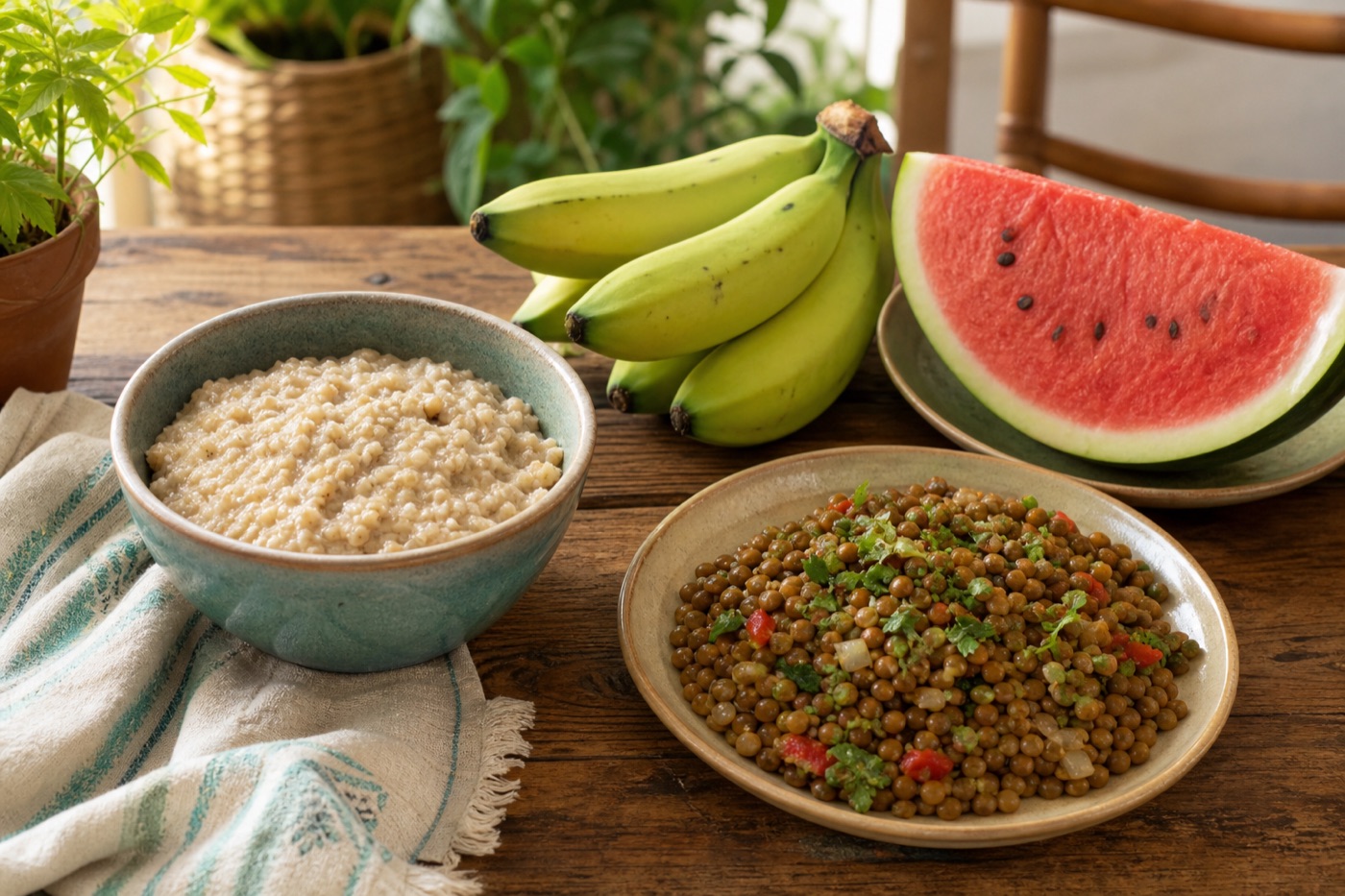
The glycemic index (GI) is a scale from 0 to 100 that ranks carbohydrate-containing foods by how quickly they raise blood sugar compared with pure glucose, which scores 100. Foods scoring 55 or less are considered low GI, 56 to 69 medium, and 70 or more high. Because GI ignores how much you actually eat, a related measure called glycemic load is often more useful day to day.
Researchers give volunteers a portion of a food containing a set amount of digestible carbohydrate, usually 50 grams, then track their blood sugar over the next two hours. They compare that curve with the response to the same amount of pure glucose, and the result becomes the food’s GI value.
Because testing involves small groups of people, and because foods vary by variety, ripeness and preparation, published GI values are averages rather than exact figures. The same food can appear with different numbers in different tables.
These groupings are typical, but values shift with cooking, ripeness and processing.
| Category | GI range | Common examples |
|---|---|---|
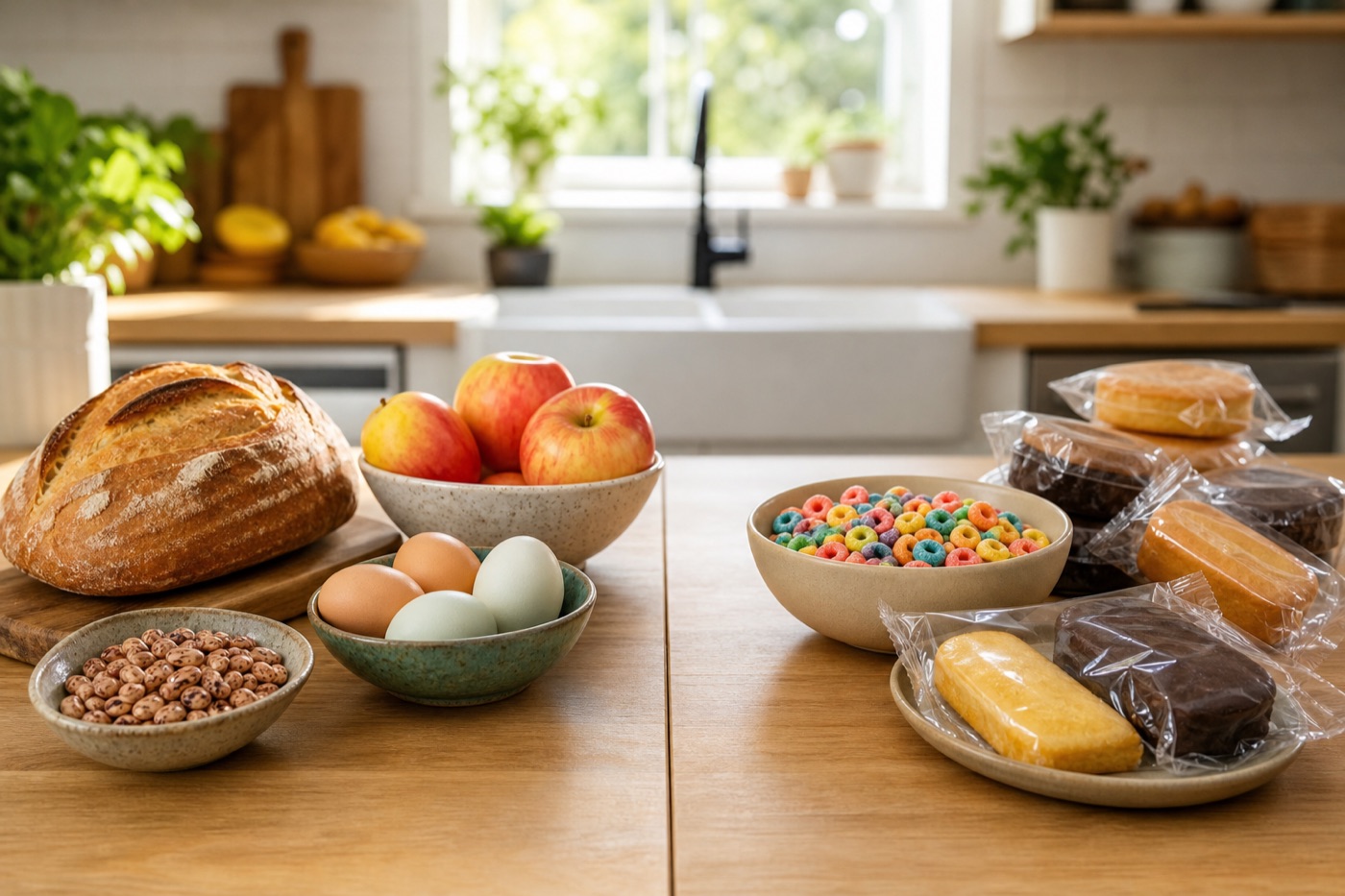
| Low | 55 or less | Lentils, chickpeas, kidney beans, barley, apples, pears, oranges, milk, plain yogurt |
| Medium | 56 to 69 | Sweet corn, pineapple, couscous, honey, some types of rice such as basmati |
| High | 70 or more | White bread, cornflakes-style cereals, rice cakes, baked or mashed white potatoes, watermelon |
Watermelon is the classic example of why GI alone can mislead, which brings us to glycemic load.
Glycemic load (GL) combines a food’s GI with the amount of carbohydrate in a typical serving:
GL = (GI × grams of carbohydrate per serving) ÷ 100
A GL of 10 or less is considered low, 11 to 19 medium, and 20 or more high.
Watermelon has a high GI, in the 70s, but a cup of diced watermelon contains only about 11 to 12 grams of carbohydrate because it’s mostly water. That gives it a GL of roughly 8, which is low. A big bowl of many types of white rice, on the other hand, pairs a fairly high GI with a lot of carbohydrate, so its GL ends up high.
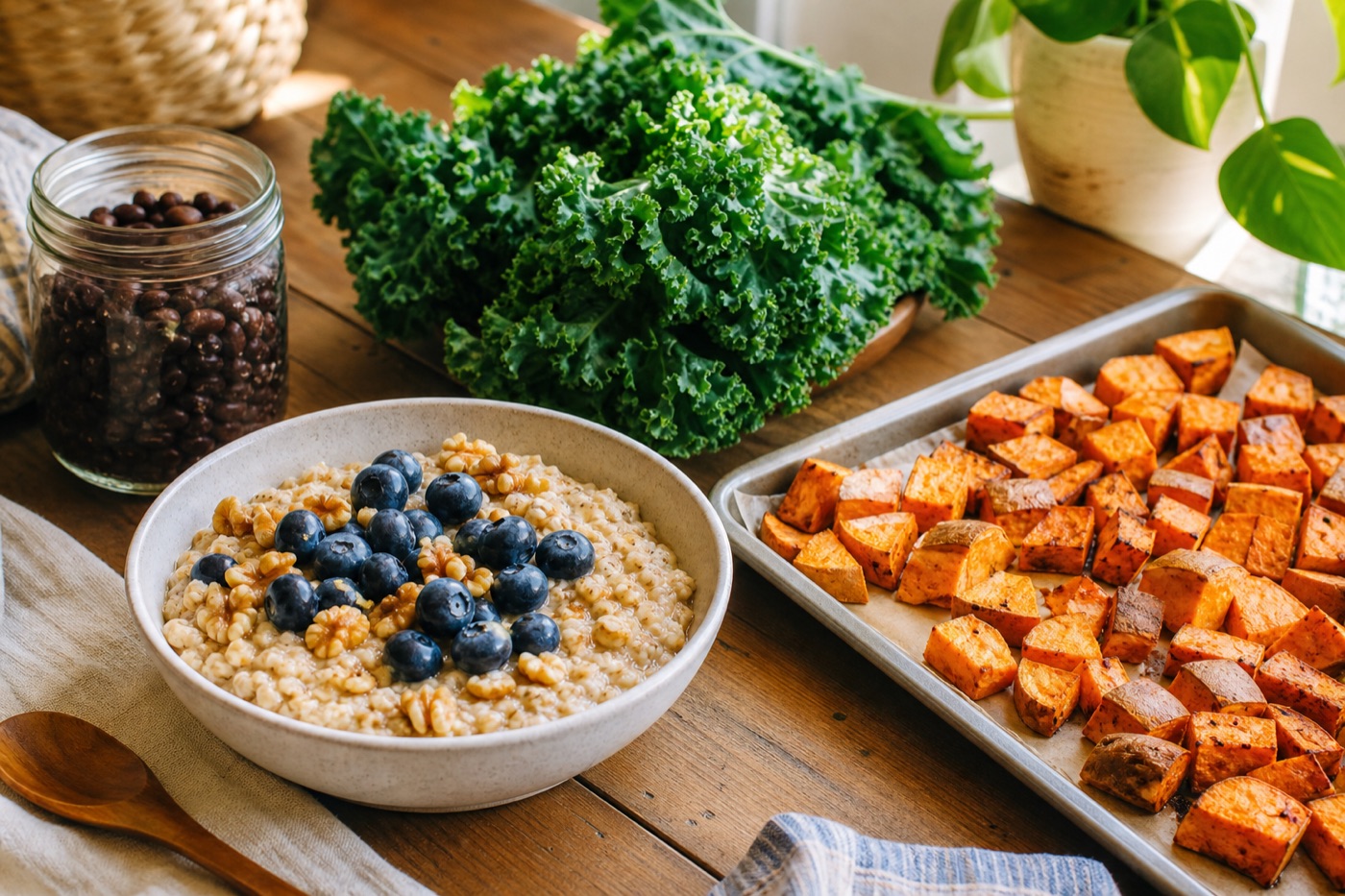
GI can be a helpful tool, especially for people working with their care team to manage blood sugar. Trading a high-GI food for a lower-GI cousin, such as steel-cut oats instead of a sugary flaked cereal, often brings more fiber and longer-lasting fullness as a bonus.
But GI has real limits:
That’s why GI works best as one consideration among many, next to fiber, added sugar and overall food quality. Our guide to complex carbs explains why whole, fiber-rich carbohydrates tend to behave better than refined ones, and our dietary fiber explainer covers why fiber is such a useful ally.
If you also see “net carbs” on packages, our explainer on net carbs vs total carbs clears up what that number does and doesn’t tell you.
The glycemic index ranks carbohydrate foods by how quickly they raise blood sugar, from low (55 or less) to high (70 or more). Glycemic load adds portion size and is often the more practical number. Both are useful guides, but they work best alongside the bigger picture: fiber, whole foods, balanced meals and how your own body responds.
Choosing lower-GI carbohydrates can be one helpful tool for managing blood sugar, often alongside portion awareness and balanced meals. It isn't a complete plan on its own. If you have diabetes or prediabetes, work with your doctor, diabetes educator or registered dietitian on an approach that fits your treatment.
Glycemic index compares how quickly a fixed amount of carbohydrate from a food raises blood sugar. Glycemic load also factors in how much carbohydrate is in a typical serving, so it better reflects the real effect of the portion you eat.
No. Some foods score low because they're high in fat, such as ice cream and certain candy bars. GI is most useful for comparing similar carbohydrate foods, like different breads or cereals, rather than as a measure of overall healthfulness.
Yes. Longer cooking usually makes starches easier to digest and raises GI, which is why soft-cooked pasta tends to score higher than al dente. Cooling cooked potatoes, rice or pasta forms some resistant starch, which can lower the response.
This guide is general information, not medical advice. For a health condition, pregnancy or a history of disordered eating, please talk with a doctor or registered dietitian.
Total carbs are all the carbohydrates in a food, including starch, sugars and fiber, and on US labels sugar alcohols too.
Read more →Ultra-processed foods are industrial products made mostly from substances extracted or refined from foods, often with additives such as flavorings, emulsifiers or colors that you wouldn't use in a home kitchen.
Read more →Clean eating is an informal way of describing a diet built mostly on whole or minimally processed foods, such as vegetables, fruits, whole grains, beans, nuts, fish and lean proteins, with fewer heavily processed products.
Read more →