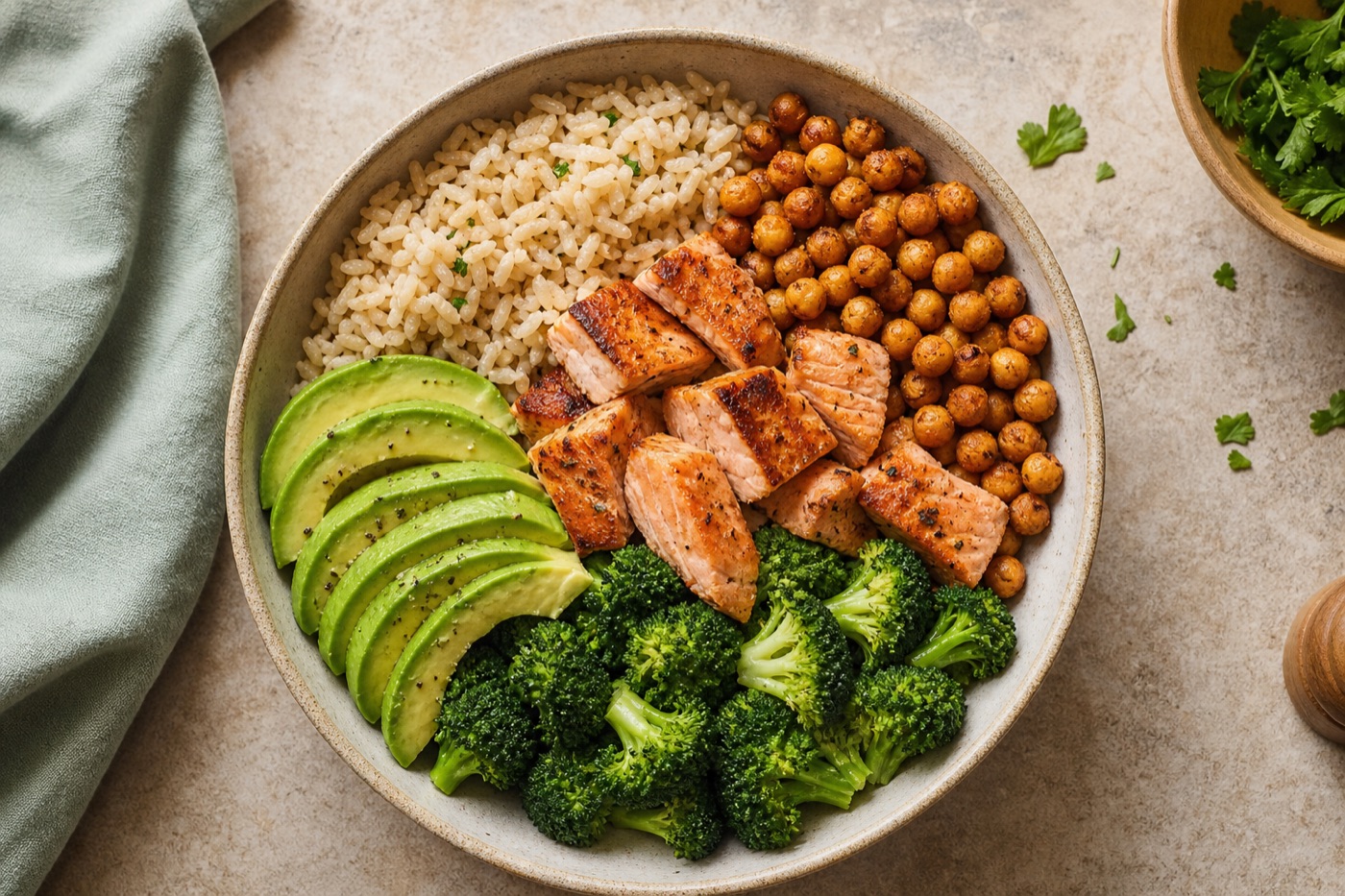
What Are Macros? Protein, Carbs and Fat Explained
Macros, short for macronutrients, are the three nutrients your body needs in large amounts: protein, carbohydrates and fat.
Read more →
A calorie deficit means taking in fewer calories than your body uses over a stretch of time. When that happens, your body covers the shortfall by tapping stored energy, mostly from fat, which is why a deficit is the basic mechanism behind weight loss. A modest, sustainable deficit usually works better than a dramatic one, and it’s not something everyone needs.
Your body spends energy all day long. The total, called your total daily energy expenditure or TDEE, includes:
If you regularly eat less than your TDEE, you’re in a deficit. Eat about the same, and your weight stays fairly stable. Eat more, and you’re in a surplus. These balances play out over days and weeks rather than single meals, so one big dinner or one light day doesn’t decide much on its own.
You may have heard that a pound of body fat holds about 3,500 calories, so trimming 500 calories a day should lead to about a pound lost per week. It’s a handy rough guide for short periods, but it oversimplifies what happens over months.
As you lose weight, your body needs less energy, both because a smaller body burns fewer calories and because it adapts in other ways. Early changes on the scale also include water, which can make the first weeks look faster than what follows. As a result, real-world weight loss usually slows over time even if you keep eating the same way. The National Institute of Diabetes and Digestive and Kidney Diseases (NIDDK) offers a free Body Weight Planner that accounts for these shifts and gives more realistic projections than the simple 3,500 rule.
The CDC notes that people who lose weight gradually and steadily, at about 1 to 2 pounds a week, are more likely to keep it off. A practical way to approach it:
Very low-calorie diets can make it hard to get enough protein, vitamins and minerals, and they should only be done under medical supervision.
A deficit doesn’t have to mean tiny meals or constant hunger. These strategies help many people:
For some people, logging food for a few weeks reveals where calories quietly add up, especially from snacks, sauces and drinks. If you’d like to try it, our guide to calorie counting apps compares the options, and our explainer on food tracking covers simpler methods. Others prefer portion guides or plate-based planning, and that works too.
A calorie deficit isn’t right for everyone. Please talk with a doctor or registered dietitian before cutting calories if you’re pregnant or breastfeeding, under 18, managing diabetes or another chronic condition, taking medication affected by food intake, or have a history of disordered eating. It’s also worth remembering that health shows up in many ways beyond the scale, including blood pressure, strength, energy, sleep and how you feel day to day. You can eat well and care for your body at any size.
A calorie deficit simply means using more energy than you take in, so your body draws on its reserves. A gradual approach built on filling foods, smarter drink choices and regular movement is easier to sustain than an aggressive cut. Treat the 3,500-calorie rule as a rough starting point, and lean on professional advice if you have a health condition or special needs.
Many people aim for a modest reduction of a few hundred calories a day, which supports gradual loss of about 1 to 2 pounds a week at most. Larger cuts are harder to maintain and make it tougher to meet nutrient needs. A doctor or registered dietitian can help set a target that fits you.
Yes. Many people create a deficit by filling half the plate with vegetables, choosing water over sugary drinks, eating more protein and fiber, and paying attention to hunger cues. Counting is one option, not a requirement.
As you lose weight, your body needs less energy to function, and early losses often include water. Both effects mean the same eating pattern produces slower results over time. A plateau is normal and doesn't mean you've done anything wrong.
Very low intakes make it hard to get enough protein, vitamins and minerals and can leave you tired and irritable. Very low-calorie diets should only be followed under medical supervision. If you're unsure what's safe for you, talk with a healthcare professional.
This guide is general information, not medical advice. For a health condition, pregnancy or a history of disordered eating, please talk with a doctor or registered dietitian.
Macros, short for macronutrients, are the three nutrients your body needs in large amounts: protein, carbohydrates and fat.
Read more →A balanced plate is a simple way to build meals: fill about half your plate with vegetables and fruit, about a quarter with whole grains or other starchy foods, and about a quarter with protein, then add a little healthy fat and a drink like water or milk.
Read more →