What Are Macros? Protein, Carbs and Fat Explained
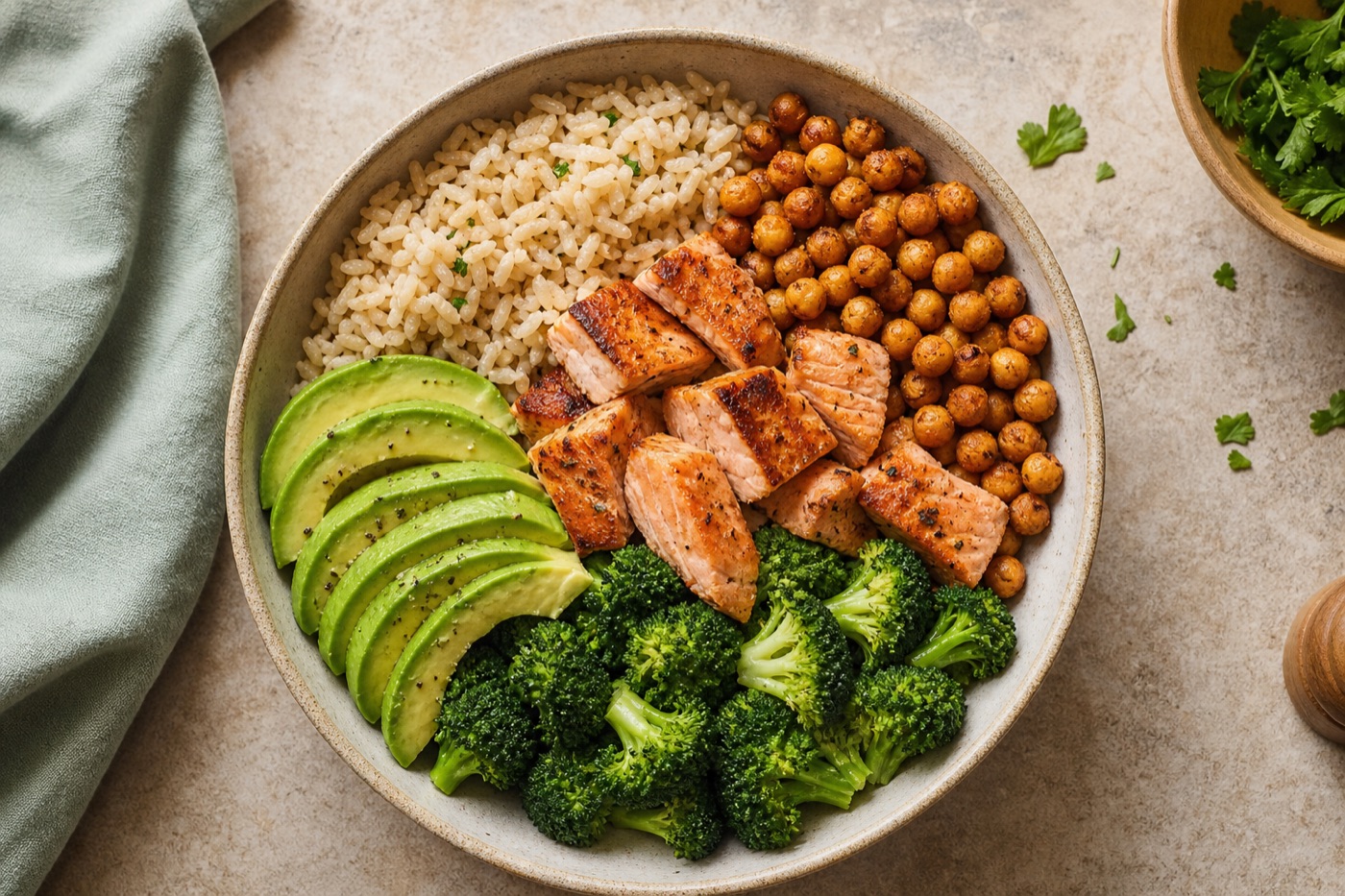
Macros, short for macronutrients, are the three nutrients your body needs in large amounts: protein, carbohydrates and fat.
Read more →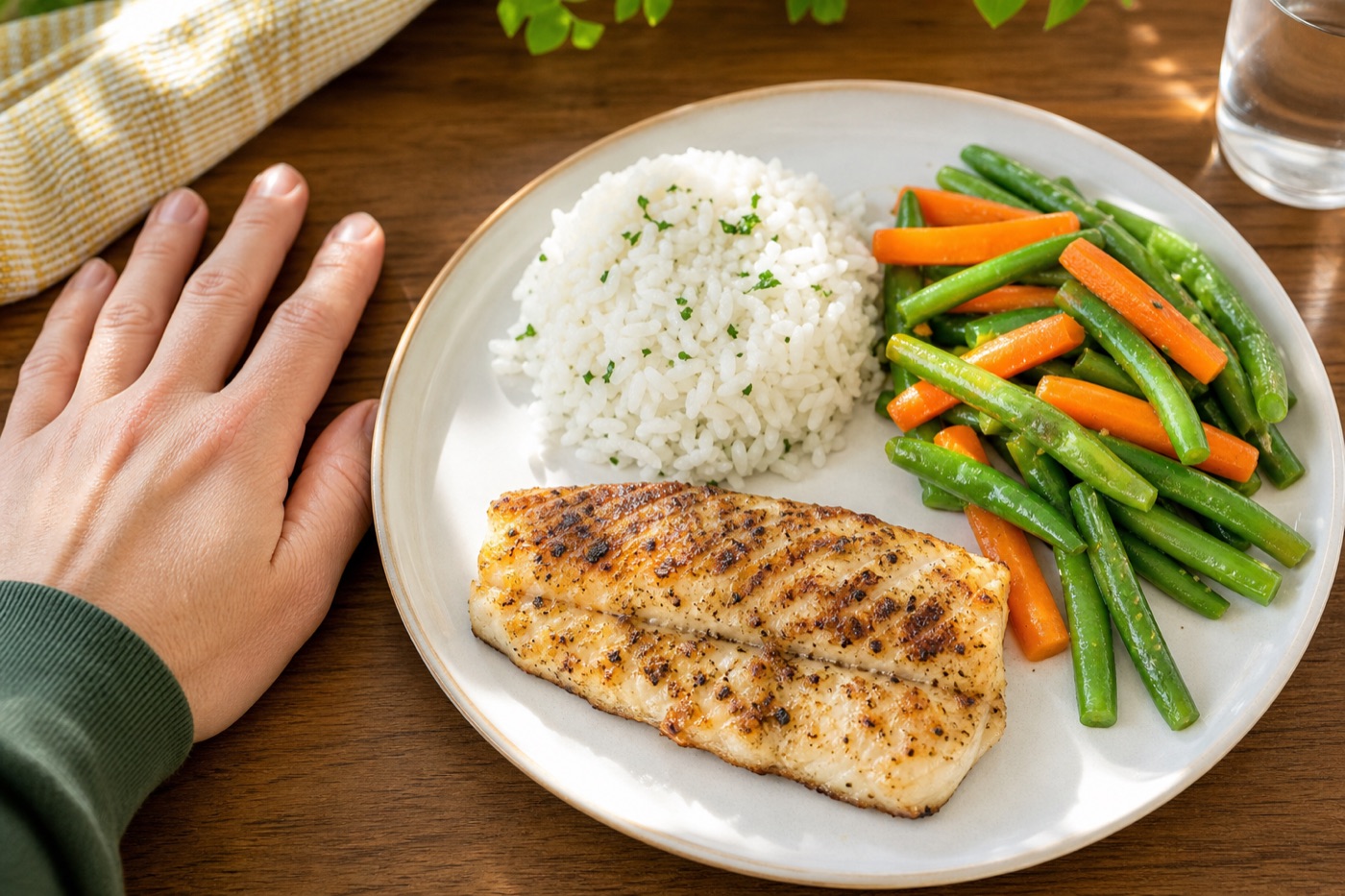
Portion control means choosing how much of a food you serve and eat so that it fits your hunger, energy needs and goals. It doesn’t mean eating tiny amounts; it means matching portions to your body. Simple tools, like using your hand as a guide, filling half your plate with vegetables and serving snacks into a bowl, make it easier without weighing every bite.
These two terms get mixed up all the time:
So a bag of chips or a bottle of juice may hold more than one serving, and your usual portion might be bigger or smaller than what’s printed. Checking the serving size first helps you read the rest of the label accurately.
Your hand goes everywhere with you, and its size roughly scales with your body. These are approximations, not precise measurements:
| Hand measure | Roughly equals | Good for |
|---|---|---|
| Palm (width and thickness, no fingers) | About 3 to 4 oz cooked | Meat, fish, tofu, tempeh |
| Closed fist | About 1 cup | Cooked grains, pasta, cereal, fruit, vegetables |
| Cupped hand | About 1/2 cup | Rice, beans, chopped fruit |
| Small handful | About 1 oz | Nuts, seeds, dried fruit |
| Thumb, tip to base | About 1 tablespoon | Peanut butter, oil, dressing |
| Fingertip | About 1 teaspoon | Butter, oil |
If you’d rather picture objects than hands, these familiar comparisons are widely used:
You can shape portions without measuring anything:
Plenty of people discover that their “tablespoon” of oil or “cup” of cereal is a lot bigger than they assumed. Measuring with cups, spoons or a kitchen scale for a week or two can recalibrate your eye, and then you can put the tools away. Some people log portions digitally during this learning phase. If that appeals to you, our guide to calorie tracking apps compares the options, and our explainer on food tracking covers lighter alternatives like photo logs.
There’s no universal “correct” portion. A tall, active construction worker and a smaller, less active retiree need very different amounts, and both can be eating well. Growing teens, athletes, people who are pregnant or breastfeeding, and anyone recovering from illness often need more. Portion control is about fit, not about eating as little as possible. If you have specific medical needs, a registered dietitian can help you find portions that work for you.
Portion control means serving amounts that match your hunger and needs. Learn the difference between a portion and a label serving size, use your hand or everyday objects as a quick guide, and let simple habits like plating vegetables first and slowing down do much of the work. Measure for a little while if it helps, then trust your eye and your body.
A portion is the amount you choose to eat at one time. A serving size is a standardized amount on the Nutrition Facts label, based on how much people typically eat. Your portion can be larger or smaller than the listed serving.
Use your hand as a rough guide, fill about half your plate with vegetables first, serve food from the stove instead of the table, and put snacks in a bowl rather than eating from the package. Eating slowly also helps you notice when you're satisfied.
Some people find that smaller plates and bowls make moderate portions look and feel more satisfying, though research results are mixed. It's an easy, low-cost experiment, so it's worth trying to see whether it helps you.
For many adults, a palm-sized portion of cooked meat, fish, tofu or tempeh, roughly 3 to 4 ounces, is a reasonable amount for a meal. Your needs may be higher or lower depending on your body size, activity and health.
This guide is general information, not medical advice. For a health condition, pregnancy or a history of disordered eating, please talk with a doctor or registered dietitian.
Macros, short for macronutrients, are the three nutrients your body needs in large amounts: protein, carbohydrates and fat.
Read more →A balanced plate is a simple way to build meals: fill about half your plate with vegetables and fruit, about a quarter with whole grains or other starchy foods, and about a quarter with protein, then add a little healthy fat and a drink like water or milk.
Read more →